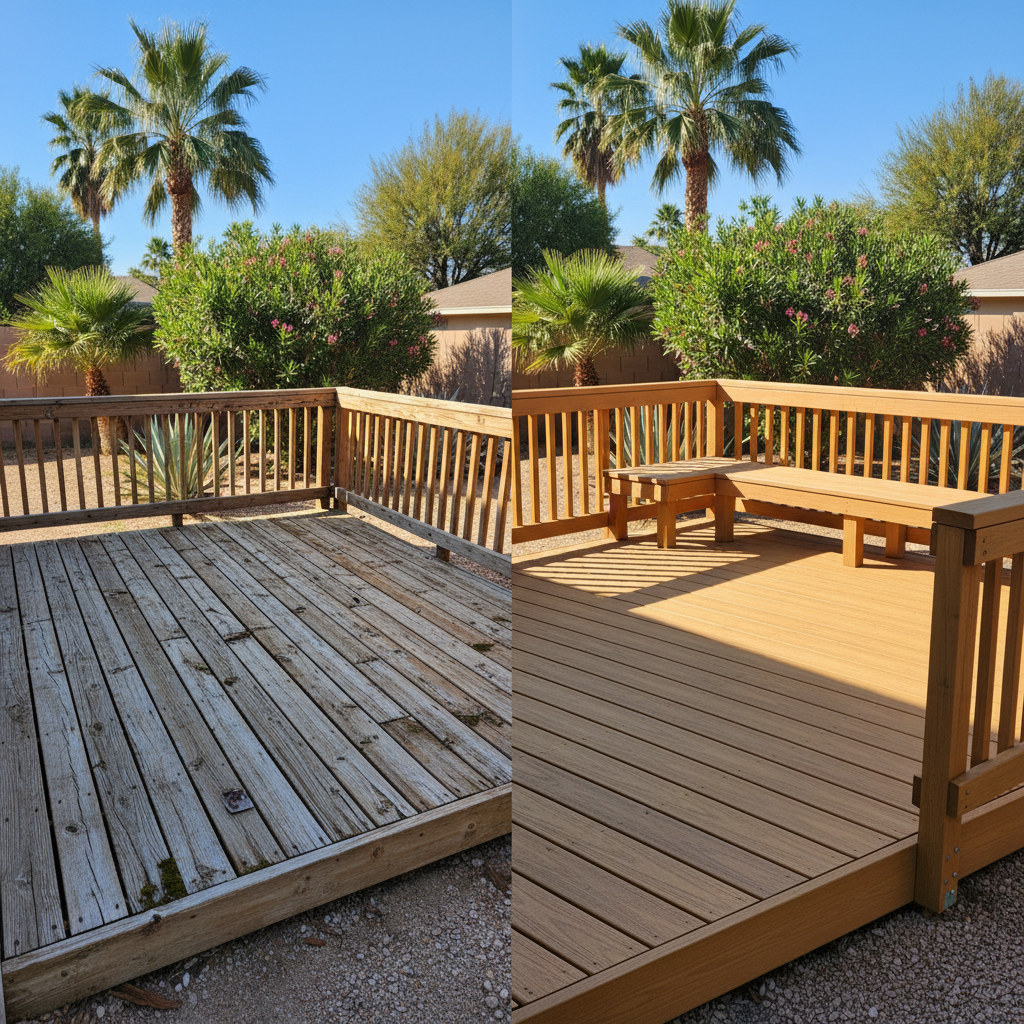
Your deck's looking a little rough around the edges, huh? Maybe some rotten boards, cracked composite, or just faded and splintering in spots. So, what's the move? Do you try to patch up those problem areas, or is it better to just replace the whole surface? It's a question I get a lot from folks here in Peoria, especially after a few scorching summers and those crazy monsoon downpours we get.
Option 1: Spot Repair & Patching
This is usually the first thing people think of when they see a few bad boards. It makes sense, right? Why replace the whole thing if only a small section is messed up? But here's the real deal with spot repairs:
- Cost: Hands down, this is the cheaper option upfront. You're only buying materials for the specific areas that need fixing. Labor costs less too, since it's a smaller job. If you've got a couple of warped boards near the grill or some splintering on a single stair tread, this can definitely save you some cash.
- Durability: This is where it gets tricky. If the underlying structure is solid and you're just replacing a few surface boards, those specific spots will hold up fine. But here's the kicker: if the damage is due to age, weather exposure, or a poor original installation, those *other* boards are probably not far behind. You might fix one spot, only to have another pop up a year later. It's like putting a band-aid on a leaky roof – it might stop the drip for a bit, but the real problem is still there, just waiting.
- Maintenance: You'll still need to maintain the *entire* deck, not just the new patches. If you're staining or sealing, you'll have to blend the new with the old, which can be tough. The new boards will absorb stain differently, and they'll weather at a different rate.
- Appearance: This is often the biggest drawback. Unless your deck is brand new and you can find an exact match for the material, those new boards are going to stick out. Wood will have a different grain and color. Composite might have a different shade or texture, especially if your original material has faded over time. You'll end up with a patchwork look, which isn't ideal if curb appeal matters to you. I've seen plenty of decks in older Peoria neighborhoods like Fletcher Heights where folks tried this, and it almost always looks... well, patched.
Option 2: Full Surface Replacement (Deck Resurfacing)
This is a bigger project, for sure, but it often gives you a much better long-term outcome. When I talk about full surface replacement, I mean removing all the old decking boards and railings, but keeping the existing, sound substructure (joists, beams, posts).
- Cost: Definitely more expensive upfront than a spot repair. You're buying all new decking material and paying for more labor. However, think about the long game. If you're constantly patching, those small costs really add up, and you still don't have a cohesive, durable surface.
- Durability: This is where you really get your money's worth. You're starting fresh with a consistent, new surface. If you upgrade to a high-quality composite or a pressure-treated wood that's better suited for our Arizona sun, you're looking at years, even decades, of solid performance. You're replacing all the worn-out material at once, so everything ages together.
- Maintenance: Much simpler. Everything is new, so you're starting with a clean slate for staining, sealing, or just routine cleaning. No trying to blend old and new. If you choose a low-maintenance composite, your upkeep drops dramatically.
- Appearance: This is the big win. You get a brand-new looking deck. Consistent color, consistent texture, and a fresh, modern feel. You can even change the material or color entirely, giving your whole backyard a facelift. It looks intentional, not like a series of repairs. This is especially true if you're replacing old, sun-baked wood with something like a new Trex or TimberTech product that holds its color much better in our intense Arizona climate.
My Recommendation for Peoria Homeowners
Look, I'm not going to tell you to spend more money than you need to. If you have a relatively new deck (say, less than 5 years old) and only one or two isolated boards are damaged by something specific – like a dropped grill or a rogue sprinkler head – then a spot repair might make sense. But that's a pretty rare scenario, honestly.
For most homeowners in Peoria with a deck that's showing its age, I strongly recommend a full surface replacement. Our sun is brutal, and the temperature swings are tough on materials. Patching often leads to a never-ending cycle of small repairs, an inconsistent look, and ultimately, dissatisfaction. You'll end up spending more in the long run and still not have the deck you want.
A full resurface gives you a cohesive, durable, and beautiful deck that will stand up to our Arizona weather for years to come. It's an investment that pays off in enjoyment, curb appeal, and just feeling good about your home. Give us a call at Peoria Deck Solutions if you want to talk through your options and get a solid quote. We'll make sure your deck is built to last.