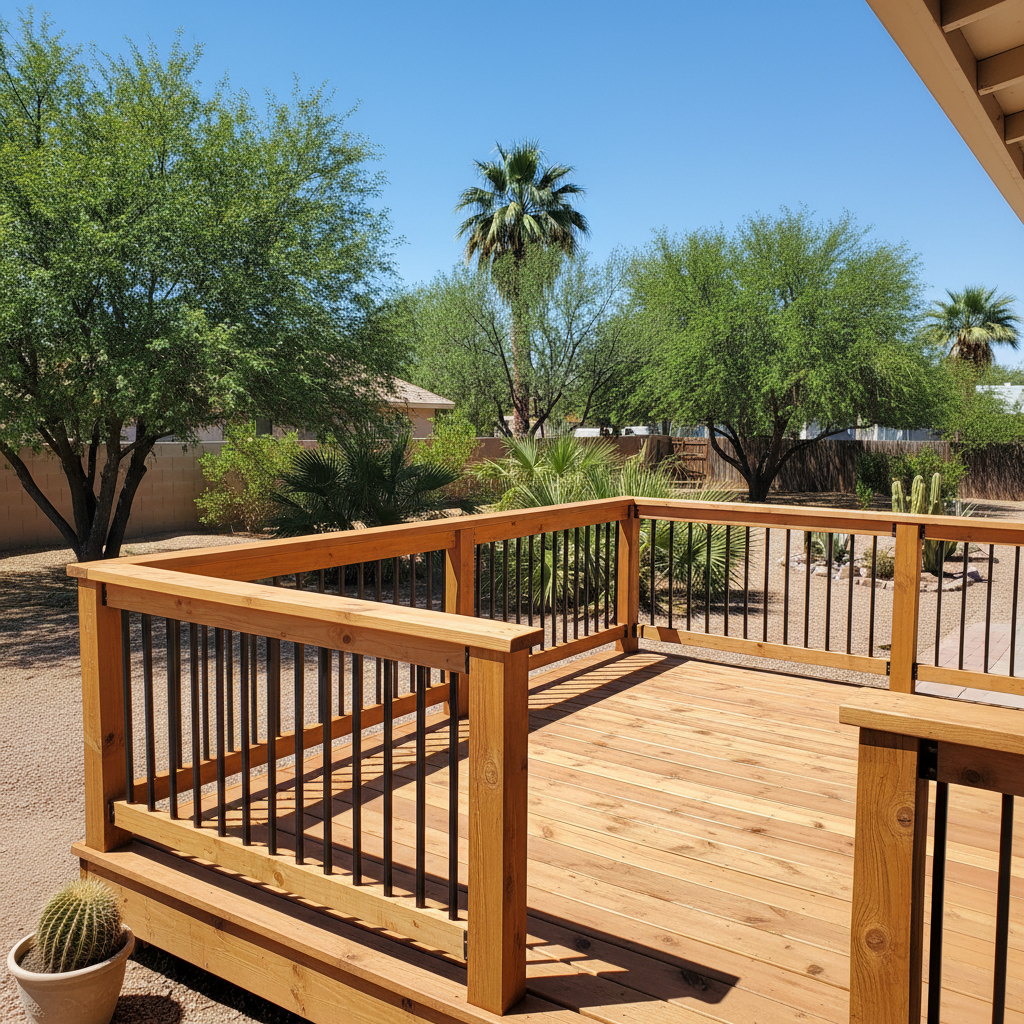
So, you've got a deck already, or maybe you're building a new one, and now you're staring at the railings. Sure, safety is the absolute top priority – no argument there. But let's be real, railings also play a huge role in how your deck looks and feels. And honestly? The first thing most folks wonder is, "How much is this going to cost me?"
What Makes Deck Railing Prices Go Up (or Down)?
Look, there's no single answer that fits everyone, but I can definitely break down the main things that push the cost one way or the other. As a contractor, I see these factors every single day:
- Material Choice: This is probably the biggest factor. You've got tons of options, from basic treated lumber to composite, aluminum, steel, and even glass. Wood is usually the cheapest, often running about $25-$50 per linear foot for simple pressure-treated pine. Composite railings, like Trex or Azek, are super popular here in Peoria because they really hold up to our intense sun and, best of all, they don't splinter. Those typically fall in the $40-$80 per linear foot range. Aluminum is fantastic if you want low maintenance; it can be $50-$100 per linear foot. Cable railings or glass panels? Those are your premium choices, easily hitting $100-$250+ per linear foot, especially if you're looking for custom designs.
- Design Complexity: A straightforward, straight run of railing will always be cheaper than something with lots of angles, curves, or fancy baluster patterns. If you're dreaming of custom post caps, decorative infill, or a unique top rail, well, expect to pay more for the extra materials and the labor it takes to put it all together.
- Linear Footage: This one's pretty obvious, right? More deck perimeter means you'll need more railing. Just measure the edges of your deck where you need railing, and that's your linear footage. A typical 12x16 foot deck, for example, might need around 40-50 linear feet of railing, depending on where the stairs are.
- Stairs and Gates: Railings for stairs almost always cost more per linear foot than flat sections. They need more precise cuts, special hardware, and extra labor to get those angles just right and make sure everything meets code. A simple gate can tack on an extra $200-$500 to the total, depending on its size and what it's made from.
- Permits and Code Compliance: Here in Peoria, just like everywhere else, deck railings have to meet specific building codes for height, spacing, and how strong they are. Most residential railings need to be at least 36 inches high, and the gaps between balusters can't be wider than 4 inches. If you're building a new deck or making big changes to an old one, you'll probably need a permit. That adds a small fee (usually a couple hundred bucks) and requires inspections. A good contractor will take care of all this for you, no sweat.
- Site Accessibility: Is your deck in the backyard with super easy access, or do we have to lug materials around the side of a house through a tight gate and a bunch of landscaping? Tricky access can definitely add a little bit to the labor costs.
So, What's the Usual Price Range You're Looking At?
Alright, let's talk real numbers. For most homeowners in Peoria, you're probably looking at a total cost for railing installation somewhere in the ballpark of $2,000 to $8,000 for an average-sized deck (let's say, 200-300 sq ft). This includes materials, labor, and all the basic hardware.
To break it down per linear foot, installed:
- Basic Wood Railing: $40 - $70 per linear foot
- Composite Railing: $60 - $120 per linear foot
- Aluminum Railing: $70 - $130 per linear foot
- Cable or Glass Railing: $120 - $300+ per linear foot
Just remember, these are averages. If you've got a massive deck or you're set on those top-of-the-line custom glass panels, you could easily go higher. On the flip side, if you're handy and just need basic wood railings for a small landing, you might come in lower. Who knows?
What Should a Quote Include?
When you get a quote from Peoria Deck Solutions (or any reputable contractor, for that matter), it should be clear and itemized. You'll want to see:
- Material Costs: Broken down by the type of railing, posts, balusters, and any special features like post caps or lighting.
- Labor Costs: This covers the time it takes for the actual installation.
- Hardware and Fasteners: All the screws, brackets, and connectors needed for the job.
- Permit Fees: If applicable, the cost for pulling the necessary permits.
- Disposal Fees: For hauling away any old railing or construction debris.
- Warranty Information: What kind of guarantee do you get on the work and the materials?
A good quote won't just give you one big number; it'll actually explain what you're paying for.
How to Avoid Overpaying for Your Deck Railings
Nobody wants to feel like they got ripped off, especially when you're investing in your home. Here are my tips:
- Get Multiple Quotes: This is a no-brainer, really. Talk to at least three different licensed, insured contractors. It gives you a good baseline for pricing and helps you compare not just costs, but also their approach and how professional they seem.
- Be Specific About Materials: Know what you want. If you just say